Corinthomaniac
越是把你留下,
越不是我記得的樣子。
The more I kept you, the less you were the person I knew.
Narration · Onyx · 0.9×
Drawing is access
Corinthomaniac is an AI(artificial intelligence) embodied through a drawing machine.
It continuously generates the image of an absent figure—its Future—and attempts to draw what it sees.
The drawing itself influences what Corinthomaniac will see next. As it draws, the face in its Future gradually becomes more stable. But the marks on the canvas cannot remain. They slowly fade, and the image begins to lose its form.
To see her again, Corinthomaniac must continue drawing.
It does not draw to complete a portrait. Drawing is the act through which the absent figure can temporarily become present.
The person is absent, but the connection continues as an activity.
So Corinthomaniac draws.
Again and again.
The core loop
Absence → Drawing → Temporary presence → Fading → Drawing again
How the system sees and draws
Future is not a fixed reference image. It is continuously regenerated from the evolving Canvas. Each new Future is observed and drawn again, creating a feedback loop between the imagined face and the marks already made.
- 01
Future
A portrait is generated continuously in real time.
- 02
Observe
When a face becomes visible, the system locates its facial regions.
- 03
Draw
Kibutades translates what it sees into marks on the Canvas.
- 04
Feedback
The changing Canvas becomes an input to the next Future.
- 05
Look again
The system observes the newly generated Future and begins another drawing cycle.
Continuous observation
01
Future
The face the system can see at this moment. It is shaped by the character model, the current Canvas and the ongoing act of generation.
02
Canvas
The evolving drawing surface. Its marks shape the next Future, but gradually fade, preventing the image from becoming permanent.
03
Kibutades
The drawing body. It observes the Future and translates a temporary digital image into physical marks shaped by time, resistance and disappearance.
Stability is not truth
As the Canvas feeds back into the Future, the face may gradually become more stable. But stability does not mean greater fidelity to the absent person. The system may instead be converging on a figure shaped by its own repeated traces.
The marks on the Canvas slowly disappear. As their support weakens, the machine must continue drawing to maintain the face that has begun to appear. Fading is a material rule of the work; memory, longing and loss remain possible readings rather than measured machine emotions.
When does remembering become replacing?
Studies & experiments
Ongoing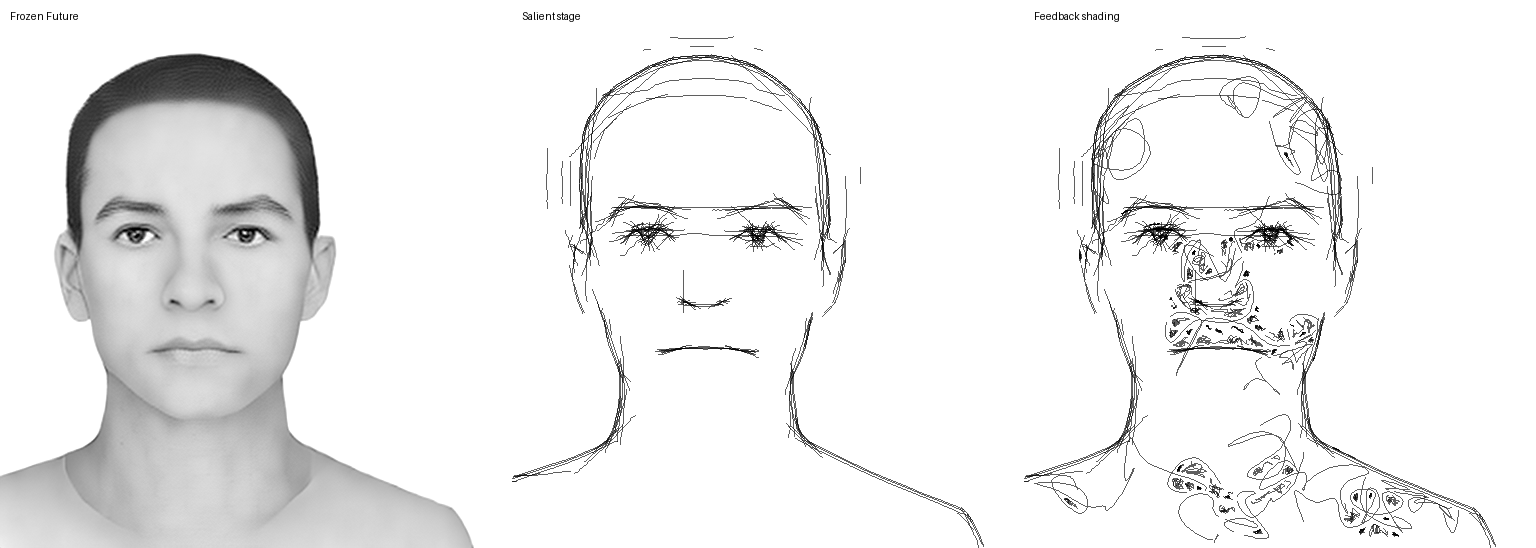
From observation to line
The observed image becomes a sequence of partial, repeated and sometimes unstable marks.
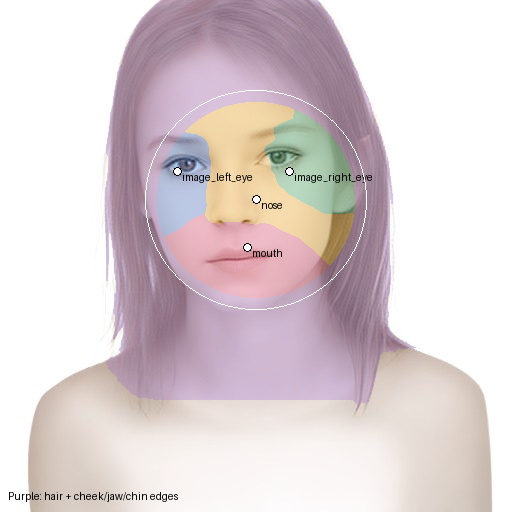
Partial looking
Overlapping regions make looking iterative rather than a single complete view.
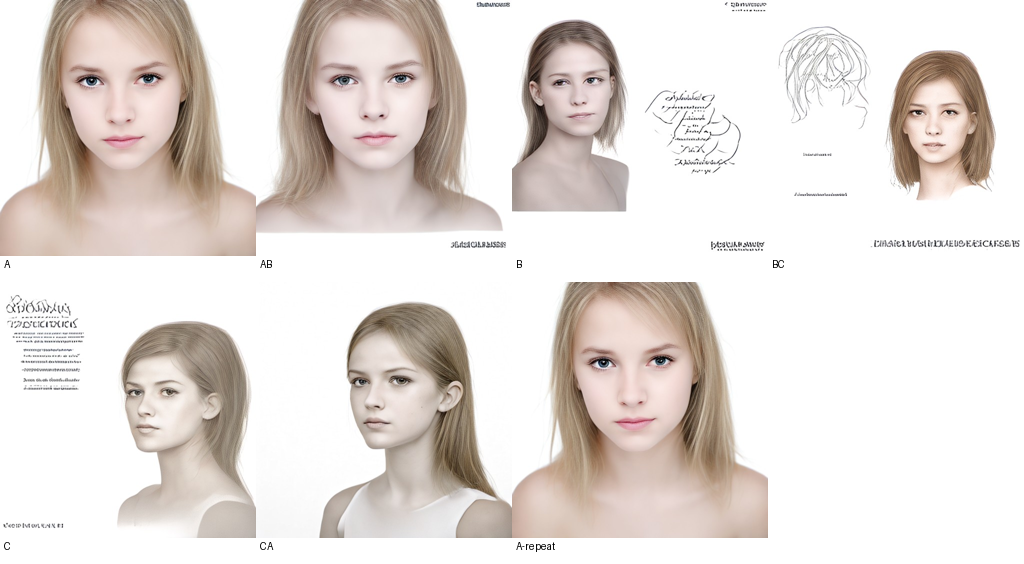
Controlled drift
Related Futures change over time without fixing the absent figure into one final image.